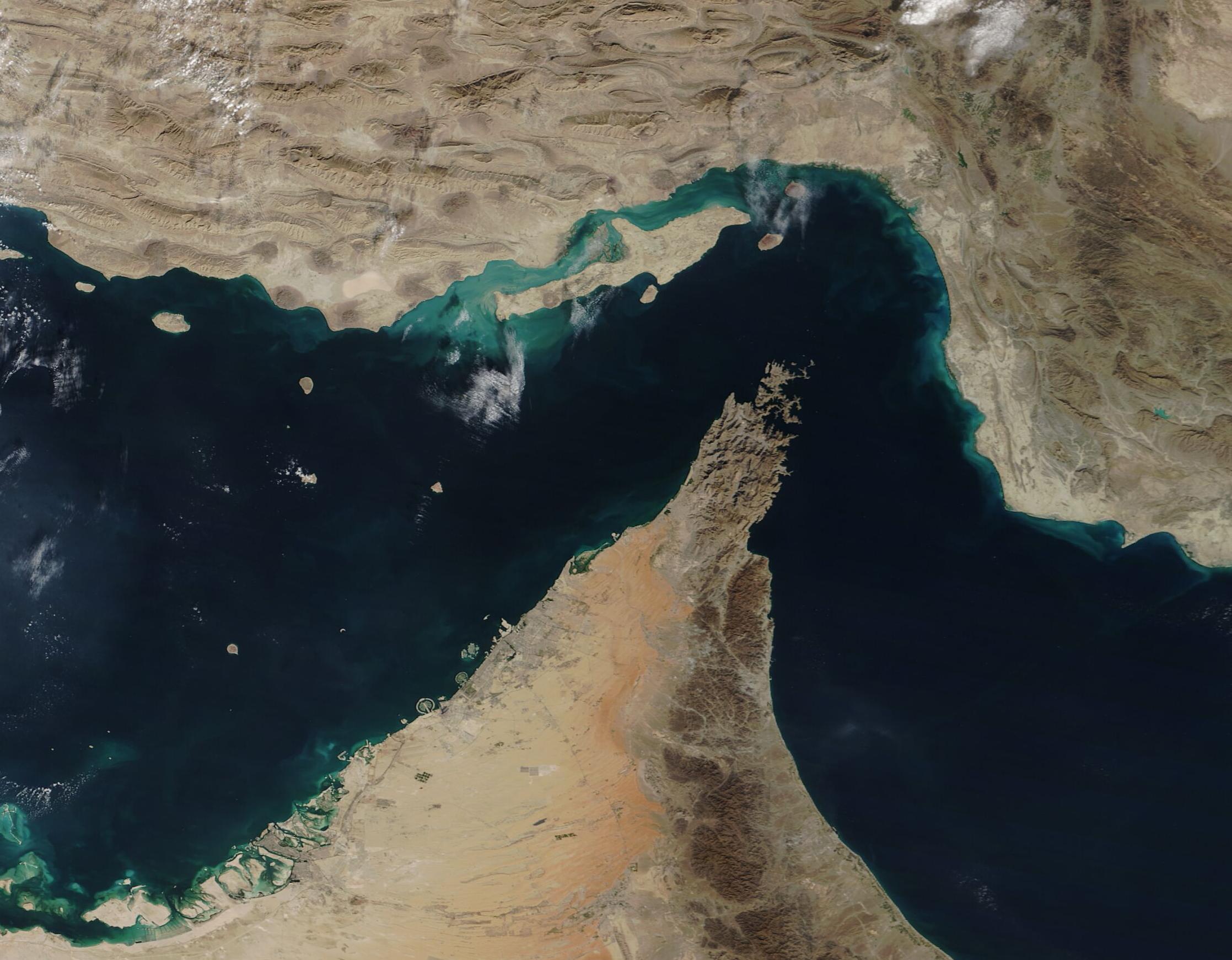
An oil market can absorb a delayed cargo. It struggles when buyers cannot know which cargo will arrive next. That uncertainty is the central economic danger at the Strait of Hormuz: disruption to a concentrated flow becomes a problem for refinery schedules, shipping finance and the price of fuel far beyond the Gulf.
The stakes are larger than the movement of any individual tanker. A dependable export route allows producers to make commitments and customers to organise around them. Once dependable delivery becomes conditional, every participant has an incentive to protect itself by holding more stock, seeking alternative suppliers or demanding compensation for risk. Individually sensible precautions can make the collective scramble for supply more expensive.
Hormuz’s economic importance is measurable. The US Energy Information Administration’s August dataset estimates that oil transit fell from 21.6 million barrels a day in the final quarter of 2025 to 4.9 million in the second quarter of 2026. These are quarterly estimates, not a live October traffic count. The agency warns that vessel-identification signals have become particularly unreliable since late February, requiring revisions and supplementary analysis. A precise-looking number on a shipping dashboard should therefore be read with caution. EIA energy-security data and methodology
The commercial bottleneck
The useful question is what would restore dependable commercial throughput. A ship needs sufficient depth and manoeuvring space, but its owner also needs an acceptable security assessment. Cargo owners need delivery schedules they can finance. Crews need credible protection. Insurers and lenders need confidence that yesterday’s successful crossing is informative about tomorrow’s.
An occasional transit proves that passage is possible. It cannot establish that hundreds of consecutive voyages can be organised at a cost the market will bear. This is why the language of “open” and “closed” often conceals more than it explains. A waterway can remain physically navigable while becoming commercially unusable for a large share of the fleet.
Industry guidance published through UK Maritime Trade Operations makes the practical problem plain: decisions require fresh, voyage-specific assessments; worsening threats can justify postponement. It also warns that reopening windows may produce congestion, mixed vessel traffic and dangerous manoeuvring. Even successful security operations can be followed by a difficult logistical restart. May 2026 industry transit guidance
A corridor is a political arrangement
The search for a dependable route also has a diplomatic version. Oman’s Foreign Ministry recorded the first meeting of a joint Oman–Iran committee in Muscat on June 29. Its account describes discussions about maritime services, coordination and future management of the strait. The statement documents a diplomatic process rather than an agreed permanent settlement. Omani Foreign Ministry account
The underlying bargain is difficult. Importers want predictable access without conceding that trade may be held hostage. Exporters want revenue and room to manoeuvre. Oman has an interest in safe navigation alongside an interest in avoiding a confrontation on its doorstep. Iran’s negotiating leverage depends partly on the cost others attach to prolonged disruption. These incentives overlap enough to make talks worthwhile but not enough to make agreement self-enforcing.
A route farther from one coastline might change exposure. It would not, as a matter of geography alone, settle who refrains from firing, who investigates incidents or what happens after the first disputed attack. Any claim that a channel has neutralised the crisis should be tested against those questions, not just its advertised dimensions.
What a new channel would actually solve
Claims about a newly dredged bypass should be separated from confirmed navigation work. This review found no authoritative confirmation of the alleged US-dredged route on the Omani side. AFP’s August 25 report describes discussions about a temporary corridor and joint mine clearance. Clearing explosives, designating a route and excavating the seabed are three different activities. AFP on the joint statement
A genuine Admiralty notice, 1192(P)/26, records a 15-metre maintained channel near Iran’s Bandar-e Shahid Bahonar and the Hormozgan steel terminal. Published online March 2 in the edition dated March 12, it concerns port approaches, not a new Omani bypass. Neither this dredging nor an agreed transit corridor establishes protection against future attack. Admiralty notice, printed page 2.50
The Australian connection
Distance does not insulate Australian motorists or businesses. Official statistics show that imports supplied 80.8 per cent of Australian refined-product consumption in 2024–25. Domestic refineries also imported about two-thirds of their feedstock. A cargo need not sail directly from the Gulf to an Australian port for Gulf disruption to affect its cost or availability. Australian energy-trade statistics
Competition for replacement barrels travels through the market. Refineries bid against one another for compatible crude; buyers of diesel and jet fuel then compete for the products those plants can supply. Freight delays and financing costs can propagate along the same chain. The origin printed on the final import document describes only the last stage of that exposure.
Australia’s energy-security debate should therefore distinguish three objectives: cushioning a temporary shortage, maintaining reliable supply relationships and reducing the amount of imported fuel essential services require. Storage, procurement diversity and lower fuel intensity address different parts of the problem. The relevant test for each measure is the interruption it can actually withstand.
Recovery should be judged by repeatable delivery rather than a single successful crossing or diplomatic announcement. Safe passage must be demonstrated over time, supported by credible information and arrangements that survive disputes. For producers, importers and distant consumers alike, the most valuable outcome is an ordinary one: a cargo arriving when it was promised.