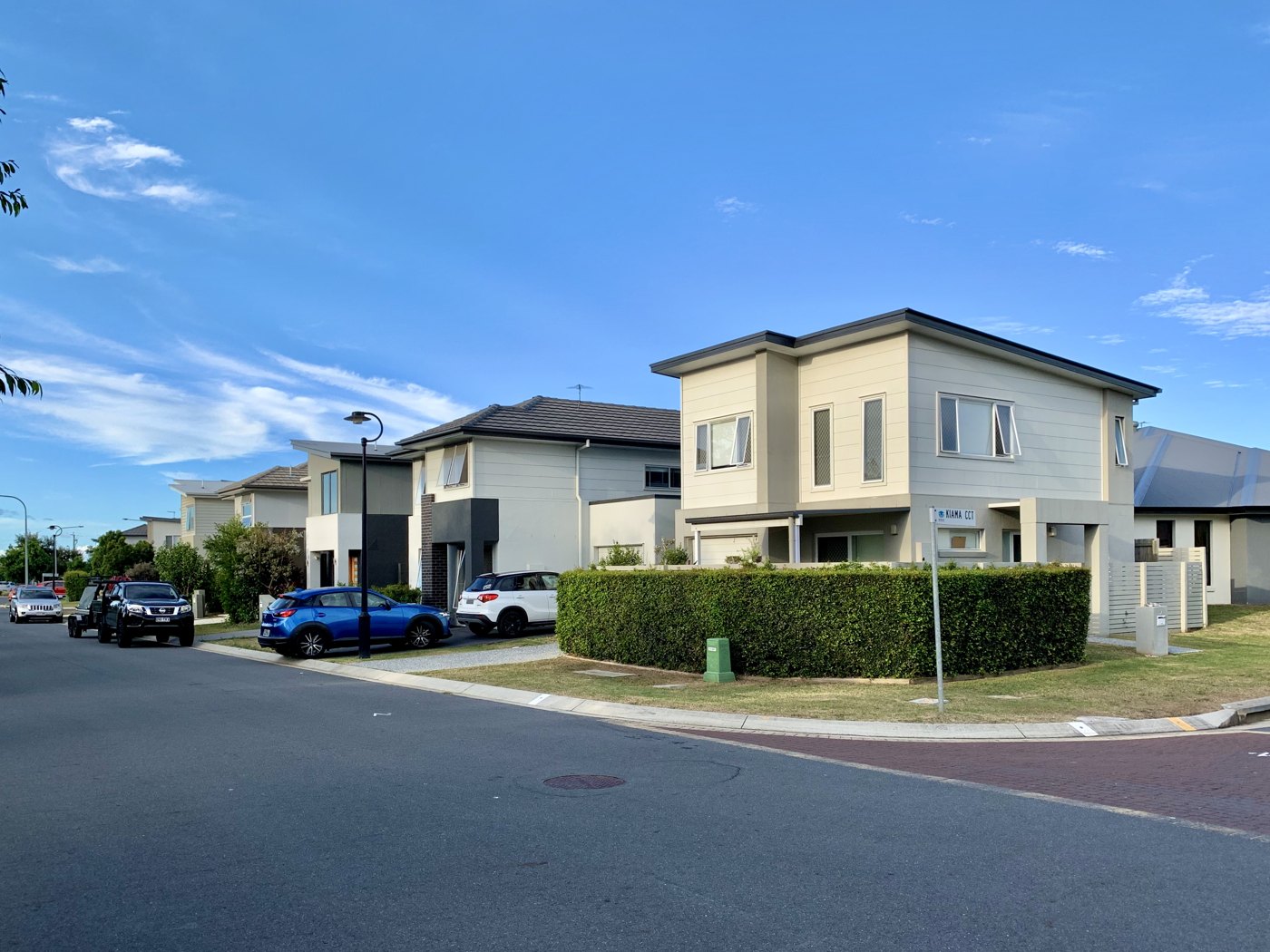
Southern Thornlands has passed a significant planning milestone. Its development scheme took effect on 23 October, replacing the interim framework for an approximately 890-hectare growth area intended to accommodate around 8,000 homes. The debate now has to catch up with that decision. Continuing to describe the scheme as a draft would miss what has changed, just as treating its adoption as the completion of the job would miss what remains. EDQ project update, 29 October
Economic Development Queensland says more than $544 million in infrastructure investment has been committed. Its published breakdown includes $256 million for roads and transport, $137 million for sewer upgrades, $93 million for open space and community facilities, and $29 million for stormwater. Those are substantial commitments, not merely coloured lines on a concept map. EDQ commencement update
But a funding announcement cannot tell a future resident when the junction outside their estate will work, whether a bus will take them to their job, or when their children can attend a nearby school. The next useful debate should concentrate on the order in which homes and services arrive.


A suburb runs on several clocks
A housing project involves several different timetables. A developer can sell land once its own commercial and approval requirements are satisfied. A major pipe depends on engineering, procurement and connections beyond that development. A road upgrade may involve land controlled by several owners. A school or bus service needs a separate government decision about demand and operating expenditure.
The practical risk is that each organisation meets its own timetable while the whole place remains inconvenient to live in. A completed home has immediate needs. It cannot wait for the eventual population of an entire growth area before its occupants begin travelling, shopping or seeking services.
That is why a credible staging plan should identify dependencies rather than offer only a final picture. Which works must operate before the first homes in a precinct are occupied? Which can follow safely? What happens if a promised connection is delayed? Residents need those answers at the scale of their neighbourhood, not just the whole development area.
The final scheme recognises different infrastructure categories. Shared trunk networks may be delivered by a provider or a developer, with development charges contributing to their cost. Lower-order works serving individual development sites fall to developers. State services and other infrastructure follow separate investment processes. The distinction matters because approval of a land-use framework does not, by itself, settle every agency’s budget. Development scheme, pages 24–25
Roads are only part of the transport answer
Redland City Council’s September submission sought clearer modelling of the effect on Mount Cotton Road, Duncan Road and Boundary Road, as well as timely public and active transport connections. It also argued that development proponents should bear the cost of the trunk infrastructure needed to service the area, rather than shift it to existing ratepayers. Those were objections to the proposed scheme, made before the final decision, and should be read in that context. Council statement, 17 September
The final framework includes changes. EDQ identifies revised Kinross Road connections, a future four-way junction at Mount Cotton Road and West Mount Cotton Road, and adjustments to industrial-area access. For public transport, however, its current explanation is that Transport and Main Roads will monitor development and provide services as population growth warrants. EDQ transport explanation
That leaves an important policy choice. Running buses before a substantial population arrives can be expensive. Waiting until travel patterns are established can leave early households dependent on cars. Neither difficulty disappears because a plan reserves space for a transport network.
The useful measure will be service: destinations, frequency, operating hours and a safe route to the stop. A road capable of carrying a bus and a bus people can use are different stages of delivery. Any future transport announcement should be judged against both.
Follow the money beyond the headline
The wider Infrastructure Activation Fund helps explain how governments intend to accelerate development. EDQ describes a joint Queensland–Commonwealth programme worth $2.4 billion, combining grants and zero-interest loans for enabling works across several growth areas. Southern Thornlands is one beneficiary, alongside Waraba, Mount Peter and other locations. The statewide amount should not be mistaken for a Southern Thornlands allocation. Infrastructure Activation Fund
Grants, loans and developer contributions do different jobs. A grant reduces the amount another participant must finance. A loan supplies money earlier but still requires repayment. A development contribution helps fund infrastructure associated with growth. Comparing headline totals without those distinctions can obscure who ultimately pays and when the cash becomes available.
The final scheme’s submissions report makes the remaining choices visible. It says future approvals may impose infrastructure works and developer charges. Its discussion of parks also refers to facilities arriving progressively through development charges and council rates. That is not proof that existing residents face a particular new bill; it is a reason to seek an explicit division of responsibilities rather than promise that no council spending will ever be involved. Submissions report, pages 11–12
A further distinction deserves attention: paying to construct an asset is different from paying to operate, maintain and eventually replace it. Public arguments about growth are often clearer when those costs are separated. A community can welcome capital investment while still asking what obligations follow it.
Make delivery visible
The next step should be a public delivery ledger. For each major road, sewer connection, school and community facility, it should identify the responsible organisation, funding status, next approval and the development stage that triggers delivery. Where dates remain uncertain, the dependency should be stated plainly.
This would help both supporters and critics of new housing. It would prevent an unfunded aspiration being mistaken for a construction promise, while giving government and developers credit when a genuine commitment progresses into a contract or completed work.
Southern Thornlands now has an adopted framework and a major infrastructure commitment. Its success will be measured more closely: whether each new neighbourhood works when people arrive, and whether existing residents can see how the cost and disruption of growth are being managed.